

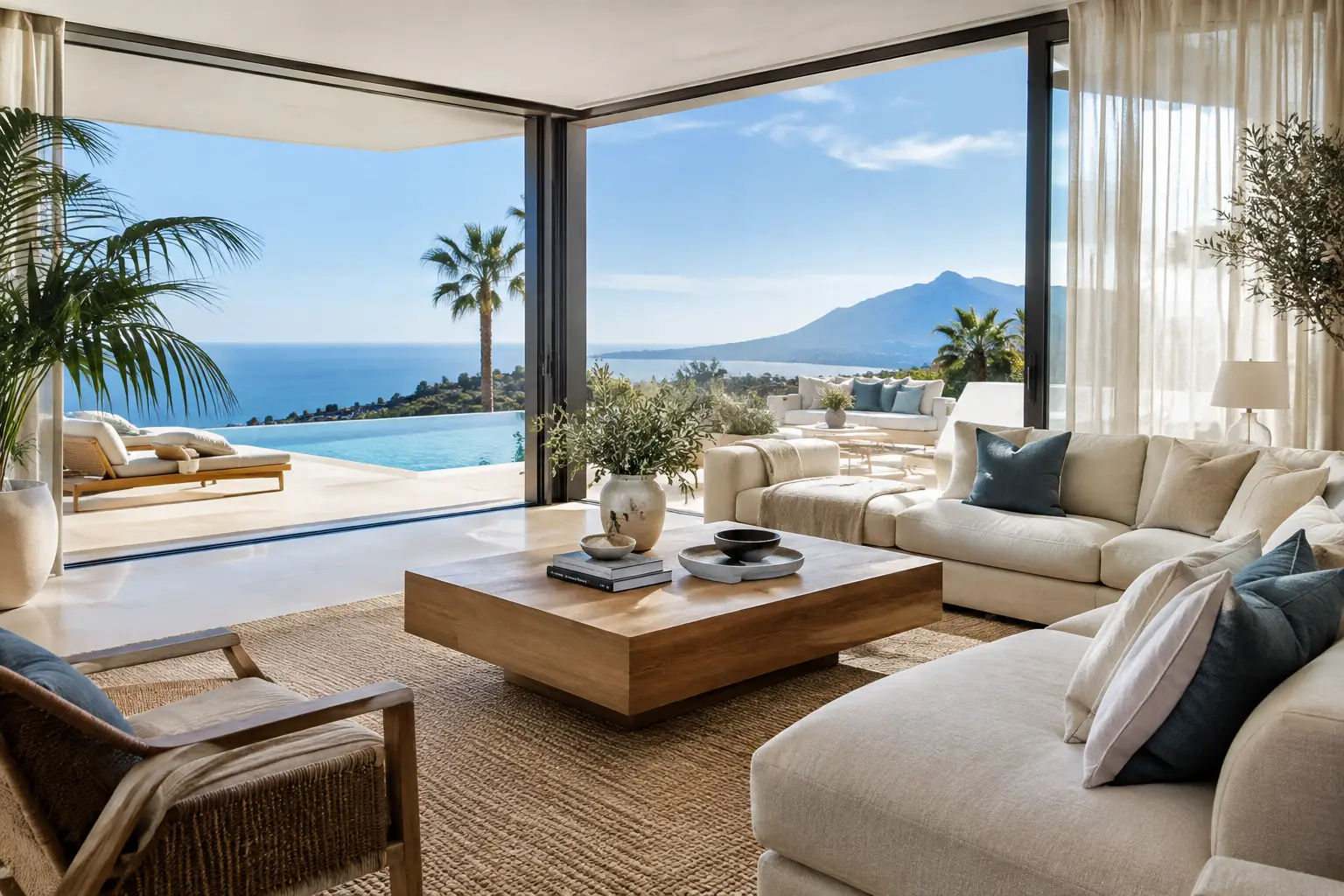
A villa can have the right address, exceptional architecture and a beautiful pool, yet still feel less compelling in photographs or during a private viewing than it deserves. This guide to luxury home staging considers the details that help a Marbella residence communicate its value with quiet confidence – from the first image a buyer sees to the lasting impression they take away after a visit.
Luxury staging is not about disguising a property or filling it with expensive objects. It is about presenting a home at its most coherent. For international buyers considering a lifestyle as much as a transaction, every space should make the setting, craftsmanship and ease of ownership feel immediately believable.
What Luxury Home Staging Should Achieve
At the upper end of the market, buyers are rarely purchasing square metres alone. They are assessing how a property will support family time, entertaining, privacy, work and relaxation. A successful presentation gives each of these possibilities a clear place without making the home feel overly arranged.
In Marbella and the Costa del Sol, the strongest properties often have an important relationship with their surroundings. Sea views, mature gardens, golf frontage, mountain backdrops and proximity to the Golden Mile or Sierra Blanca should be felt throughout the viewing. Staging should direct the eye towards these assets rather than compete with them.
This distinction matters. A heavily themed interior may photograph dramatically but can narrow the audience in person. A considered scheme, by contrast, helps prospective owners imagine their own art, routines and guests within the home. The goal is aspiration with enough restraint to leave room for personal vision.
Begin With the Property’s Natural Character
Before selecting a cushion, flower arrangement or dining setting, identify the residence’s defining qualities. A contemporary beachfront home calls for a different approach from an Andalusian villa in Benahavís or a refined flat near the Golden Mile. Architecture should set the direction.
A minimalist home with expansive glazing benefits from clean sightlines, tactile materials and a controlled palette. Let the stone, joinery and natural light take the lead. A more traditional property may invite linen, ceramics, warm timber and a softer layering of texture, provided the result remains polished rather than rustic.
The key is consistency. If the entrance promises composed contemporary living, the principal suite, terraces and entertaining areas should continue the same visual language. Inconsistent rooms create uncertainty, while a coherent home suggests careful stewardship.
Edit before you add
The first staging decision is often removal, not acquisition. Personal photographs, highly specific collections, visible paperwork, pet accessories and excess furniture can distract from proportion and finish. This does not mean stripping a home of warmth. It means retaining the pieces that reinforce quality and purpose.
Large rooms should not be left empty simply because their scale is impressive. Buyers need to understand how a salon can accommodate conversation, how a covered terrace can host dinner, or how a secondary sitting room could serve a family. Equally, furniture should never obstruct circulation or conceal a view.
Stage the Arrival and the Key Moments
A buyer begins forming an opinion before they cross the threshold. The approach, gate, driveway, façade and entrance hall deserve the same attention as the main living room. Exterior lighting should be operational, landscaping neat and pathways clear. The arrival should feel private, calm and properly maintained.
Within the home, concentrate effort where emotional decisions are most likely to be made: the principal living area, kitchen, principal suite, principal terrace and pool environment. These spaces should feel ready to enjoy, not merely ready to inspect.
A dining table on a terrace can suggest relaxed evenings with family and friends, but it should be scaled to the space and styled with restraint. A pair of well-placed loungers may make a pool terrace feel inviting; too many accessories can make it look like a hotel set. The best luxury staging is often felt before it is consciously noticed.
Let light do its work
Marbella’s light is a considerable asset, but it needs managing. Open curtains and blinds to frame a view, while avoiding harsh glare where possible. Replace failed bulbs, ensure colour temperatures are consistent and turn on selected lamps to soften shadowed corners.
For photography, timing matters as much as furnishings. A west-facing terrace may be most appealing later in the day, while sea-facing rooms can benefit from a clear morning. Professional imagery should reflect the experience buyers will actually have, rather than relying on excessive editing that creates expectations the viewing cannot fulfil.
Create a Lifestyle Without Creating a Fiction
The most persuasive homes reveal a way of living that suits their setting. In a beachside residence, this may mean a beautifully ordered outdoor shower area, fresh towels and a terrace arranged for long lunches. In a gated hillside villa, it may be a reading corner with mountain views, an elegant home office or a fireside seating area for cooler evenings.
The distinction is authenticity. Do not stage a gym as a nursery or a formal dining room as an office unless there is a clear reason to demonstrate flexibility. Buyers at this level value honest information. If a room has an unusual shape or limited natural light, present it thoughtfully and explain its potential with confidence rather than attempting to conceal it.
Scent should be approached with particular care. The home must be impeccably aired and free from cooking, damp or pet odours. A subtle, neutral fragrance may be appropriate, but strong perfumes can be divisive and may prompt questions about what they are intended to mask.
Prepare for Photography and Private Viewings Separately
Photography captures attention. The viewing confirms the decision. They require related but different preparation.
For the camera, every image needs a clear focal point. Straighten chairs, conceal cables, remove bins and check reflections in mirrors and glazing. Bedrooms should have crisp bedding and balanced bedside tables; bathrooms should be immaculate, with minimal, high-quality details. The kitchen should feel in use but not cluttered – a considered bowl of fruit is more convincing than an elaborate display.
For a viewing, consider the practical experience. The property should be comfortable in the prevailing weather, with indoor and outdoor areas accessible and every feature operating as expected. Windows should be clean, pool areas orderly and storage spaces presentable. A discerning buyer may open cupboards, inspect technical areas and ask about security, climate control, maintenance and community arrangements.
Privacy also requires planning. Remove documents, valuables, medications and anything that reveals unnecessary personal information. Luxury is closely tied to discretion, particularly for internationally visible owners and buyers. A composed viewing protects both the property and the people connected to it.
When Professional Staging Is Worth Considering
A well-furnished, carefully maintained residence may only need editing, styling and professional photography. An empty new-build property, a holiday home used intermittently, or a house with dated furnishings may benefit from a fuller staging programme. The appropriate investment depends on the home’s price position, condition, target buyer and likely marketing period.
Professional staging is especially useful when it clarifies scale in large open-plan interiors or helps an overseas buyer understand the role of less obvious rooms. It can also create continuity between an architectural concept and the visual standard expected in a premium marketing campaign.
However, staging cannot correct poor maintenance, unresolved repairs or an unrealistic pricing strategy. Address visible defects first: chipped paint, tired sealant, faulty handles, neglected planting and incomplete works can undermine even the most elegant furnishings. Presentation is most effective when it supports a property that is already correctly prepared for market.
At Amrein Properties, the strongest presentations begin with an individual reading of the residence, its location and the buyers most likely to appreciate it. That tailored judgement is essential: a family villa in Nueva Andalucía should not be marketed as though it were a lock-up-and-leave pied-à-terre, and a refined beachfront flat should not be dressed like a country house.
Frequently Asked Questions
Should I move out before staging my home for sale?
No, moving out is not always necessary. A lived-in luxury home can present beautifully when personal items, excess furniture and visual clutter are carefully edited. Full staging is most useful where an empty property needs warmth and scale, or where existing furnishings do not reflect the quality of the residence.
Do I need to renovate before putting a luxury property on the market?
You do not necessarily need a full renovation before marketing, but visible maintenance issues should be resolved. Buyers can accept a home they wish to personalise, particularly where the location and architecture are exceptional; they are less likely to overlook signs of neglect, incomplete work or poor care.
Can staging help buyers understand an unusual room?
Yes, staging can help a buyer read the purpose and potential of an unusual room. A restrained furniture layout can show how the area works as a study, reading room or secondary sitting space, while still allowing buyers to consider their own preferred use.
How personal should a home feel during a private viewing?
A home should feel warm and lived in, but not overly personal. Buyers need to appreciate the owner’s care while being able to imagine their own life there. Removing personal photographs, documents and highly specific collections also protects privacy and keeps attention on the property itself.
What is the most useful final check before a viewing?
The most useful final check is to walk the property as a buyer would, from the approach to the terraces and technical spaces. Check that lighting, climate control, doors, windows and outdoor areas are functioning and immaculate. A calm, well-prepared viewing allows the property to speak with the assurance it deserves.