


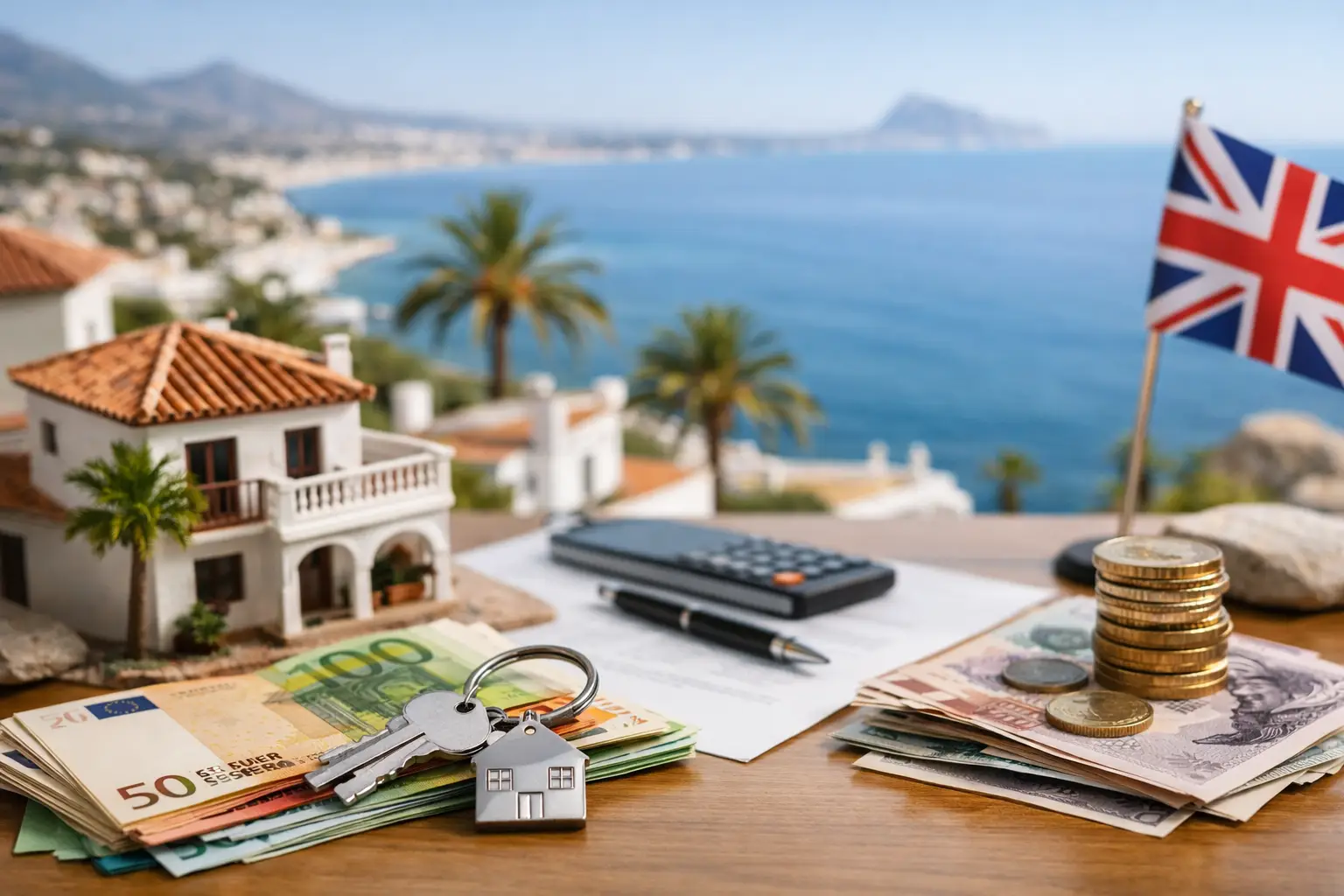
A Marbella villa may be an emotional decision, but the financing should be settled with complete calm before a reservation contract is signed. For international purchasers, understanding how to finance Spanish property means looking beyond the headline price: the structure of your wealth, the currency in which it is held, the purchase taxes, and the lender’s timetable all shape the right approach.
At the higher end of the Costa del Sol market, the strongest position is not always an all-cash one. Some buyers prefer the discretion and certainty of cash, while others use a Spanish mortgage to preserve liquidity for investments, business interests or a wider family portfolio. The appropriate route depends on your circumstances, the property and how you intend to own it.
How to finance Spanish property: the main routes
Most overseas buyers choose between a cash purchase, a mortgage from a Spanish bank, financing arranged through an international private bank, or a combination of these options. Each can work well, but the practical considerations are different.
A cash purchase is usually the most straightforward route. It can shorten the transaction, reduce reliance on a bank valuation and make an offer more compelling in a competitive setting such as the Golden Mile, Sierra Blanca or beachfront Marbella. Cash does not, however, remove the need for rigorous due diligence. Your lawyer should still verify title, planning status, community obligations, licences where relevant, and any charges registered against the property.
A Spanish mortgage can be attractive when capital is better retained elsewhere. Non-resident buyers are commonly offered a loan-to-value ratio of around 60 to 70 per cent of the bank’s lower valuation or purchase price. The precise figure will depend on nationality, age, income, assets, credit profile and the lender’s view of the property. For particularly high-value homes, the percentage may be lower, even where the purchaser’s financial profile is exceptional.
Private banking finance may offer greater flexibility for clients with established international relationships. It can be secured against a broader asset base rather than the Spanish property alone, and may fit buyers who have income, investments and liabilities across several jurisdictions. The trade-off is that terms can be more bespoke, documentation may be extensive, and the overall cost should be assessed carefully rather than compared only through the interest rate.
Begin with your true acquisition budget
The purchase price is only one part of the commitment. In Andalusia, buyers should generally allow a meaningful additional provision for taxes, legal advice, notary and Land Registry fees, mortgage-related charges where applicable, and any specialist reports required for the property. A resale purchase is normally subject to transfer tax, while a new-build home is generally subject to VAT and stamp duty. The applicable rates and basis of calculation should be confirmed with an independent Spanish tax and legal adviser before you commit.
For a luxury home, it is also sensible to consider the costs that begin after completion. Community fees, insurance, utilities, security, furnishing, garden and pool maintenance, and property care can be significant. A well-run villa may be a pleasure to own, but it is not a passive asset. Buyers planning occasional use should factor in year-round oversight from the outset.
Do not overlook currency exposure. If your funds are in sterling but the purchase is denominated in euros, a movement in exchange rates between offer and completion can materially alter the cost. This is particularly relevant when a purchase has a longer new-build completion schedule. Specialist currency planning can help buyers set an exchange strategy, including staged transfers or a forward contract, but it should be arranged early and considered alongside the mortgage timetable.
What Spanish lenders look for
Spanish banks lend to overseas buyers, but they will expect a clear and well-documented financial picture. Mortgage underwriting is often more document-led than purchasers anticipate, especially where income is generated through companies, trusts, partnerships or international investment structures.
A lender will usually request proof of identity, your Spanish tax identification number, recent bank statements, tax returns, evidence of earnings, details of existing borrowing and documents supporting the source of funds for your deposit. Salaried applicants may provide payslips and employment confirmation. Business owners commonly need company accounts, personal tax documentation and an explanation of dividends or other distributions. Documents issued outside Spain may need translation, certification or legalisation.
The bank will also commission a formal valuation from an approved valuer. This is not a substitute for a purchaser’s independent technical survey. A bank valuation is prepared for lending purposes and may be conservative, particularly for distinctive homes where lifestyle value, privacy and design quality are not easily captured by comparable sales.
Affordability matters as much as the deposit. Lenders will assess whether regular income comfortably supports the proposed repayments alongside existing commitments. Buyers who are asset-rich but have less conventional income should speak to an adviser familiar with private banking or international lending before assuming standard retail mortgage criteria will fit their position.
The timing that protects your negotiating position
A mortgage should be explored before you begin serious negotiations, not after your preferred property has been reserved. An agreement in principle can clarify the likely borrowing range, though it is not a final loan offer and remains subject to valuation, documentation and the bank’s full approval.
Once terms are agreed, the purchase process normally moves through reservation, private deposit contract and completion before the notary. Deposit arrangements vary, but a private contract can create substantial obligations for both buyer and seller. If financing is central to the purchase, your lawyer should review the contract wording and any finance-related conditions before funds are paid.
New-build purchases require particular discipline. Payments may be staged during construction, and buyers should establish how each instalment will be funded, what protections apply to payments made before completion, and whether mortgage finance will be available when the property is ready. The final lending decision is not something to leave until keys are in sight.
Choose the ownership structure before applying
For many purchasers, buying in their personal name is the clearest route. It is often the simplest structure for a second home and can make mortgage underwriting more direct. Yet it is not automatically right for every family.
A company, trust or shared ownership arrangement may be considered for succession planning, privacy, asset management or a wider international estate plan. Those benefits must be weighed against Spanish tax implications, reporting obligations, future sale considerations and potentially more complex bank requirements. A structure that is efficient in one country can create friction in another.
This is why financing, tax planning and legal ownership should be discussed together. A Spanish lawyer, tax adviser and mortgage specialist each see a different part of the picture. Coordinated advice helps prevent an elegant plan in principle from becoming expensive or impractical at completion.
Questions worth settling before you offer
Before making an offer, establish whether you will buy personally or through a structure; how much of the price you wish to fund; whether your deposit is already available in euros; and how quickly your lender can issue a binding offer. Also decide what level of liquidity you want to retain after completion. A highly leveraged purchase may preserve capital, but it introduces rate and refinancing exposure. An all-cash purchase offers certainty, but can concentrate funds in a single illiquid asset.
For buyers considering holiday lets, financing should be assessed even more carefully. Lenders may take a cautious view of anticipated rental income, while local licensing rules, community statutes and tax treatment can affect the commercial case. A home chosen primarily for family use should not be underwritten on optimistic rental assumptions.
With family ownership since 1985 and long-standing local knowledge, Amrein Properties can help purchasers understand how the financing process fits into a well-managed Marbella acquisition. The aim is not simply to secure a property, but to arrive at completion with the right advisers, the right structure and the confidence to enjoy it.
The most successful purchases are planned before the perfect view appears. Put the financial framework in place early, and you will be ready to act decisively when the right Spanish home comes to market.